
| Perhaps no other place on Earth can evoke the same emotions in biologists, geologists, or naturalists as the Galápagos Islands. The rich history of discovery begun by Charles Darwin in the early 1800's continues today in the ongoing investigations on these unique communities and biota. The isolation which these islands afford their occupants leads to obvious questions concerning how the islands were formed and how their plants and animals reached the islands. |
Chick on images for enlargements
|
|
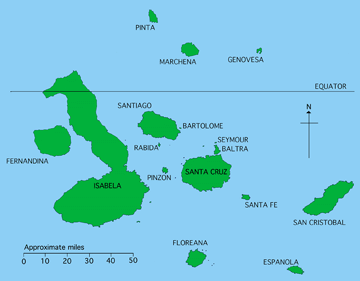
The Galápagos Islands lie approximately 600 miles ( 960 kms) west of mainland Ecuador, directly stradling the equator: 1°40' N -1°40' S latitude, 89°14'-92°01' W longitude. The island chain has over 45 named volcanic islands but only 13 major islands and 103 smaller islands not much larger than rocks. Most islands have two names, one in Spanish and another in English. The Spanish names are preferable to the Ecuadorians, but some islands have two Spanish names, for example, Floreana equals Isla Santa María.
|
 |
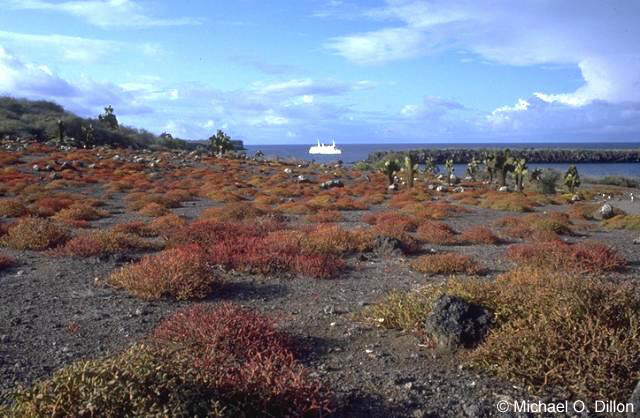 |
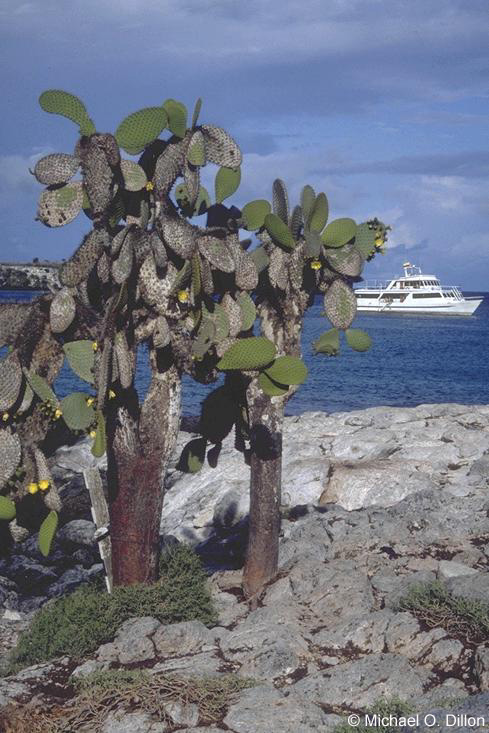
The size of islands ranges from large islands like Isabela with 1800 sq mi (4 670 sq km) and a height of 5600 feet (1,700 meters) tall. Smaller islands are really small, like Floreana with 66 sq mi or Isla Daphne Minor which is little more than a large rock. Plaza Sur, pictured here, possesses arborescent cacti, Sesuvium, and land iguanas. |
|
The climate is usually warm and with precipitation from January through June and cooler and drier from July to December (garúa). In July you can usually count on prevailing winds from the southeast and the seas are often choppy. During El Niño events, the climate is influenced by the associated warm water currents that greatly increase clouds and rainfall. In the El Niño of 1982-83, it rained in the Islands for nearly 9 months. December - June daytime temps at ca. 84°F (29°C). July - November with fog but little rain, daytime temps reach 66°F (19°C). Rainfall is usually less than 750 mm per year; however, El Niño events can raise yearly totals to over 1500 mm. |
 |
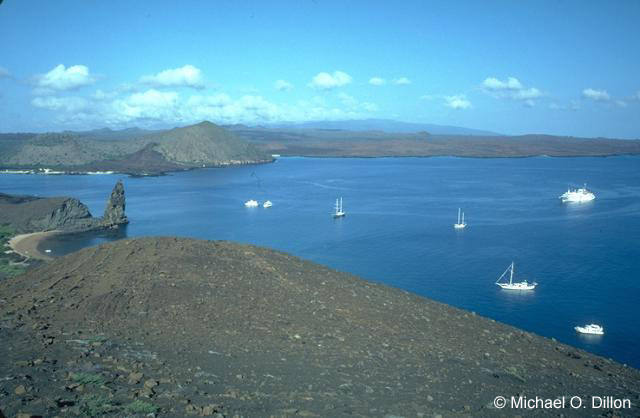
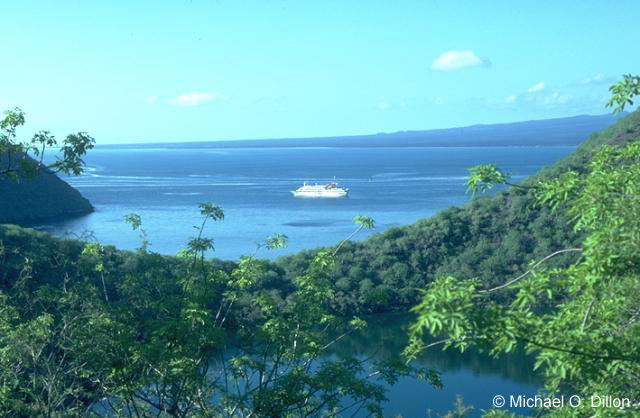 Tagus Cove on Isla Isabela (Albemarle Island) with a view of Darwin's Lake (foreground) a saltwater lake. |
The varied topography of each island and variation in moisture availability stimulates a range of woody vegetational types, including mangrove swamps, arid scrublands and montane and cloud forests (Mueller-Dombois & Fosberg, 1998, Wiggins & Porter, 1971). |
|
|
|
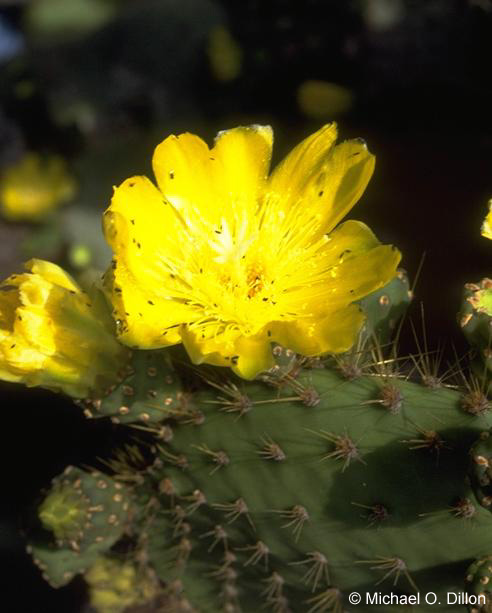 Opuntia echios flower |
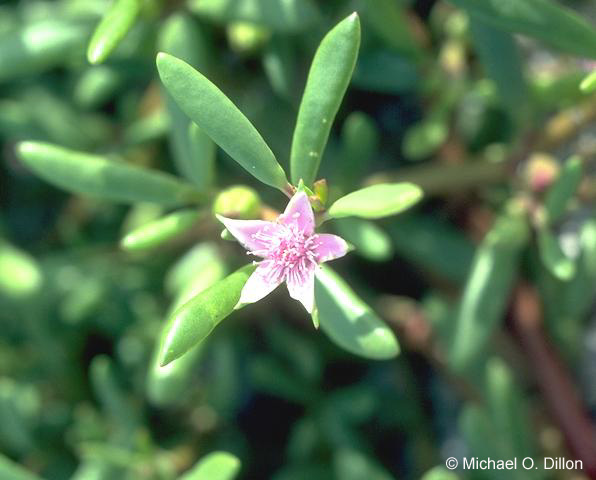 Sesuvium edmonstonei flower |
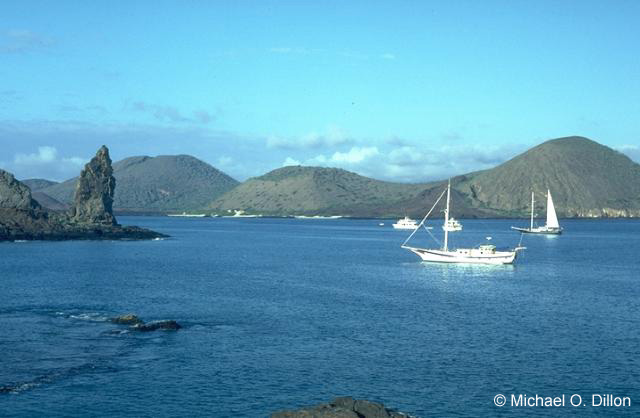
Sullivan Bay looking west to Satiago |
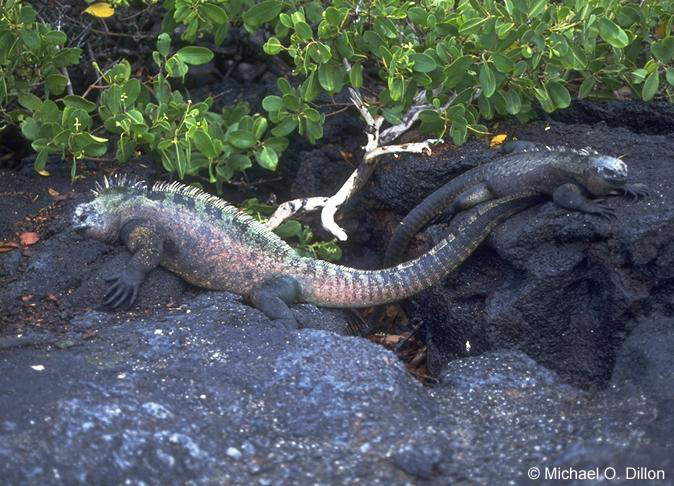
Marine iguanas lounging in mangroves |
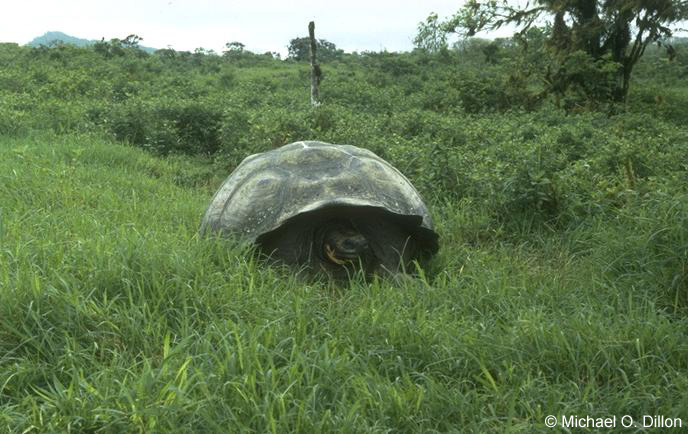
'Galápago' or Giant Tortoise |
Fauna: 2 species of endemic bats, 2 species of pinnipeds (fur seal, sea lion), 6 different types of rats, 108 species of birds (77 endemics, only occur in the Islands), 1 endemic snake, land and marine iguanas, 7 endemic lizards, 1 species of giant tortoise, and an estimated 1000 insects. |
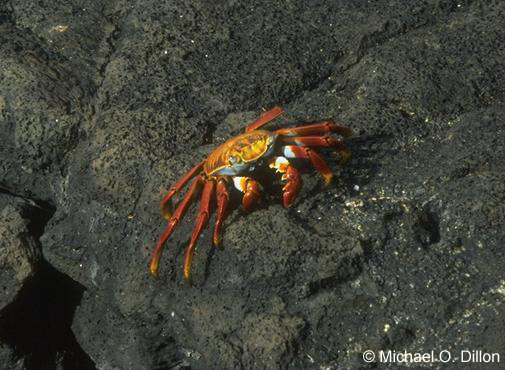
Sally Lightfoot crab on lava |
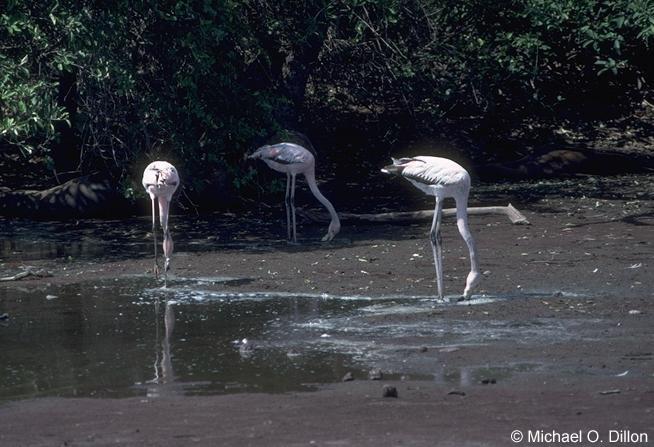
Flamingos feeding in brackish lagoons |
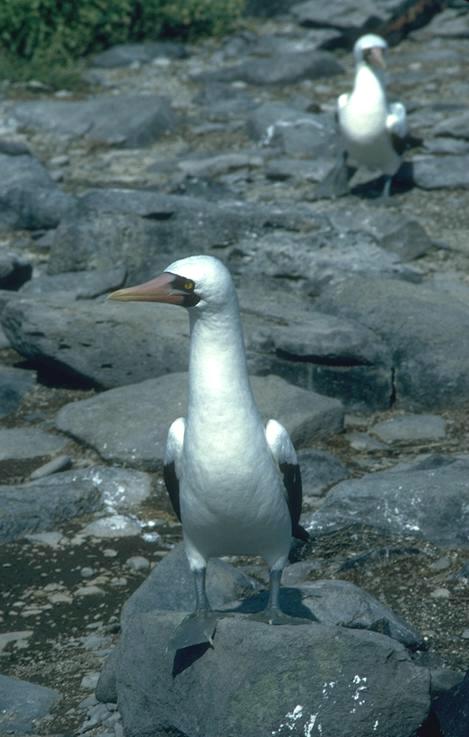
Masked Boobies 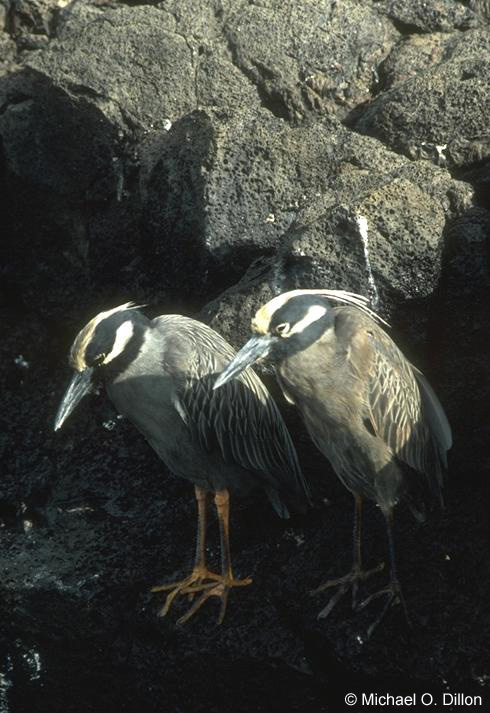
Night Herons |
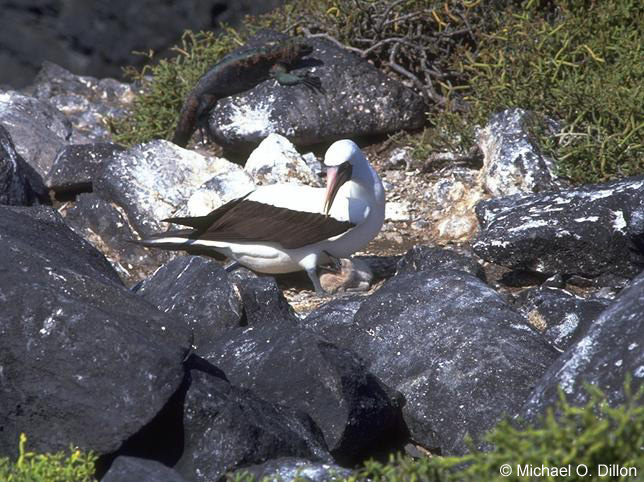
A mother Masked Boobie tends her young chick
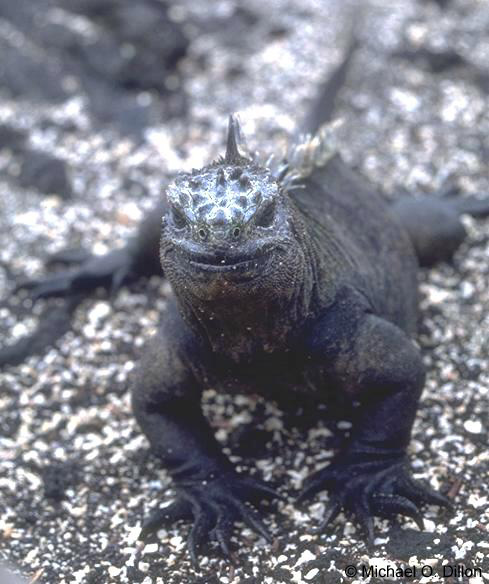 Rather handsome Marine Iguana
 |
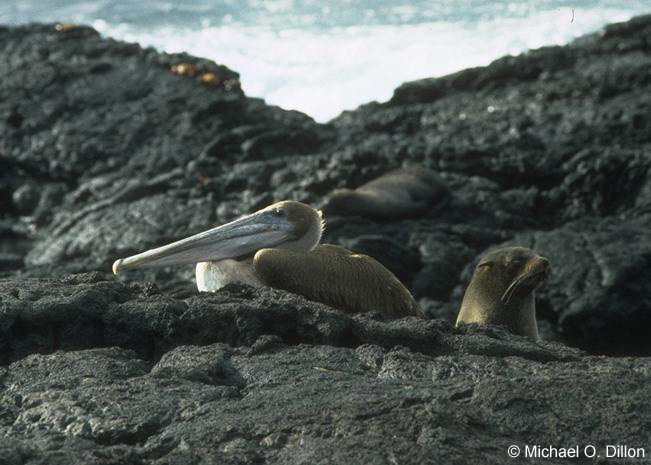 Pelicans and sea lions
 |
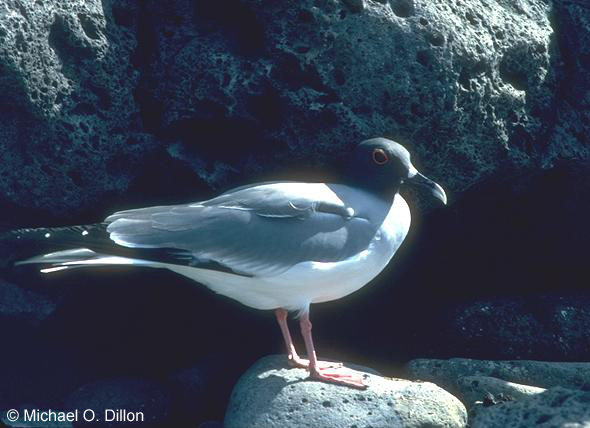 Swallowtail Gull
 |
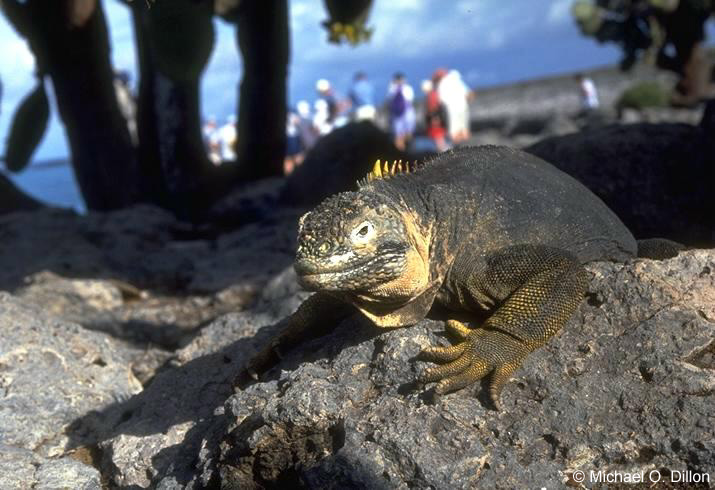
Land Iguana on Plaza Sur
|
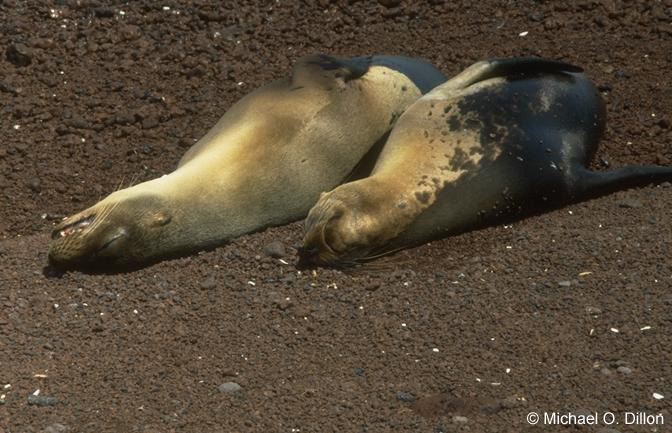 Sea Lions sleeping on a warm beach
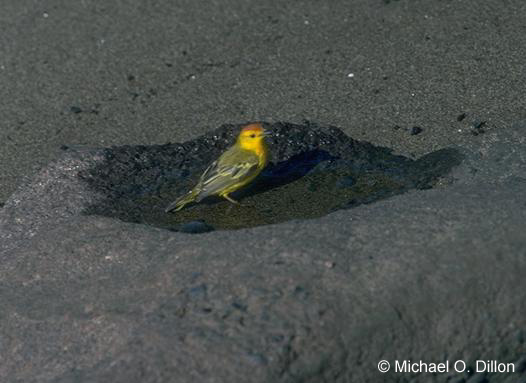
Yellow Warbler |
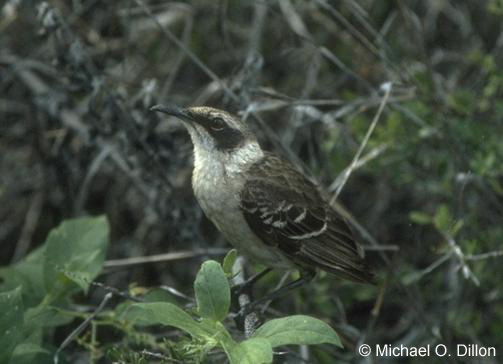
| Introducted animals are always dangerous on islands. The species, both plant and animals, that have evolved without preditors are suddenly attacked by such animals as the house rat, house mouse, goats, cattle, burros, pigs,dogs, cats. | 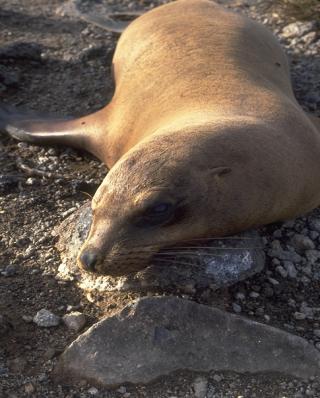 |
Field Museum Scientists
|
A series of informal discussions will address these
|